
Is Theology Dying?
A conference reflection

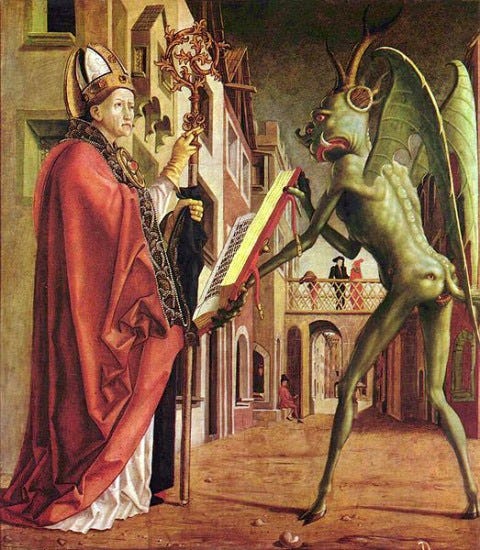
This weekend I have been at the American Academy of Religion conference. This morning, I am participating in a round table discussion organized by Beatrice Marovich, on the question “Is Theology Dying?” All participants began with an initial statement; here is mine.
To answer the question of whether theology is dying as an academic discipline, I think we need to draw a distinction between what theology holds in common with other humanities disciplines and how it functions differently across different institutional contexts. On the one hand, theology is just one target among many in the broad-based assault on all humanities disciplines, which are being systematically deprioritized and increasingly just eliminated even from stable and well-resourced universities. The strategies for coping with those trends have been broadly the same across all humanities disciplines—curricular changes that students never learn of and hence never respond to; intense trend-chasing in research and hiring (above all the terrible waste of devoting what may be the final tenure lines ever in our field to nonsense like “digital humanities” or “religion and AI”); and a general bias in favor of practicality and application.
On the other hand, there are factors that grant theology a unique vulnerability as well as unique privileges. In terms of vulnerabilities, theology has always been a weird fit in the modern secular research university, and a sense that religion in general is not really a site of knowledge production is likely what sets up theology and religious studies to be “the first to go” in many humanities purges. But for a long time, theology enjoyed a kind of exorbitant privilege compared to other humanities disciplines—whole separate institutions devoted to its teaching (seminaries and divinity schools), special sources of funding and support (for instance, the first religious studies department I worked for had a special endowment established by donors who wanted to preserve the school’s largely vestigial denominational affiliation), and a built-in broader audience for our work (not only ministers but motivated laypeople).
As the mainline churches decline, much of that infrastructure is crumbling as well. But even in relatively strong institutional settings, the speculative and conceptual side of theology has been increasingly sidelined in favor of practicality and application. The remaining new hires are focused on practical theology—whatever the fuck that means—pastoral theology, or moral theology, with traditional systematic positions almost unheard of even at very traditional institutions. If even the core consumers of theology, aspiring ministers, can only be enticed to study theology with the promise of a pastoral pay-off, that is surely a bad sign for theology’s cultural salience.
Yet as Beatrice points out, theological themes continue to circulate in the broader culture in unpredictable ways. To some extent, responding to the theological “Wild West” that is emerging may be a trap for us, because as scholars we are bound to want to take a debunking, wet-blanket approach that can say little more than that people are doing it wrong—which is not to say that they’re not doing it wrong. (Peter Thiel’s top-secret lectures on the Antichrist, for instance, were surely utter gibberish.) But there is a positive side to this ferment of activity, which is that people are still hungry to engage in theological thinking. I see it every day with my students. Teaching in an interdisciplinary Great Books program, I have occasion to bring up theological questions in nearly every course, and the students always seize upon them. Religious students are trying to make sense of their own lives and commitments, but secular students are just as fascinated to make sense of the forces shaping their broader culture. We need to hold open spaces for that kind of reflection for as long as we can—both formally in the classroom and informally through the kinds of social spaces that we can cultivate online, for example. We may even need to be more patient with the hapless people who want to lecture us about religion upon learning of our profession!
To keep people interested, though, I think we need to keep theology weird, and part of that may mean holding immediate political pay-off at a distance. I don’t think it’s any accident that both radical theologies of liberation and mainline theologies of liberalism have been so moribund in recent decades. In both cases, it could seem that theology had collapsed into politics, leaving one to ask whether the often quite complex and sophisticated theological armature was actually adding anything distinctive or meaningful. Theology’s anomalous place in the modern secular world and its institutions of knowledge-production makes it an attractive site for cultural critique, but that appeal collapses as soon as theology becomes aligned with a particular secular party line. The fact that anti-establishment types keep reaching for theology—even if ineptly, even if in pursuit of ends that we rightly abhor—is therefore not just something we should tolerate, but something we should celebrate. The day theology stops attracting cranks and weirdos is the day we can declare it well and truly dead. From that perspective, our task as theologians is in large part to be the kind of cranks and weirdos we want to see in the world.
Stuck the landing 😂
The decline in theology has got to be something to do with how anyone who thinks deeply about philosophical and theological questions pretty quickly realizes that we shouldn't be giving any credence to the underlying fact claims from religion that theology is based on. I read an article a few months back about how seminaries these days are factories for turning their students into atheists. When religious thinkers are coming at it from that sort of "we all know this isn't really TRUE true, just a nice cultural tradition I'm part of" angle it's tough to justify spending much time on theology.